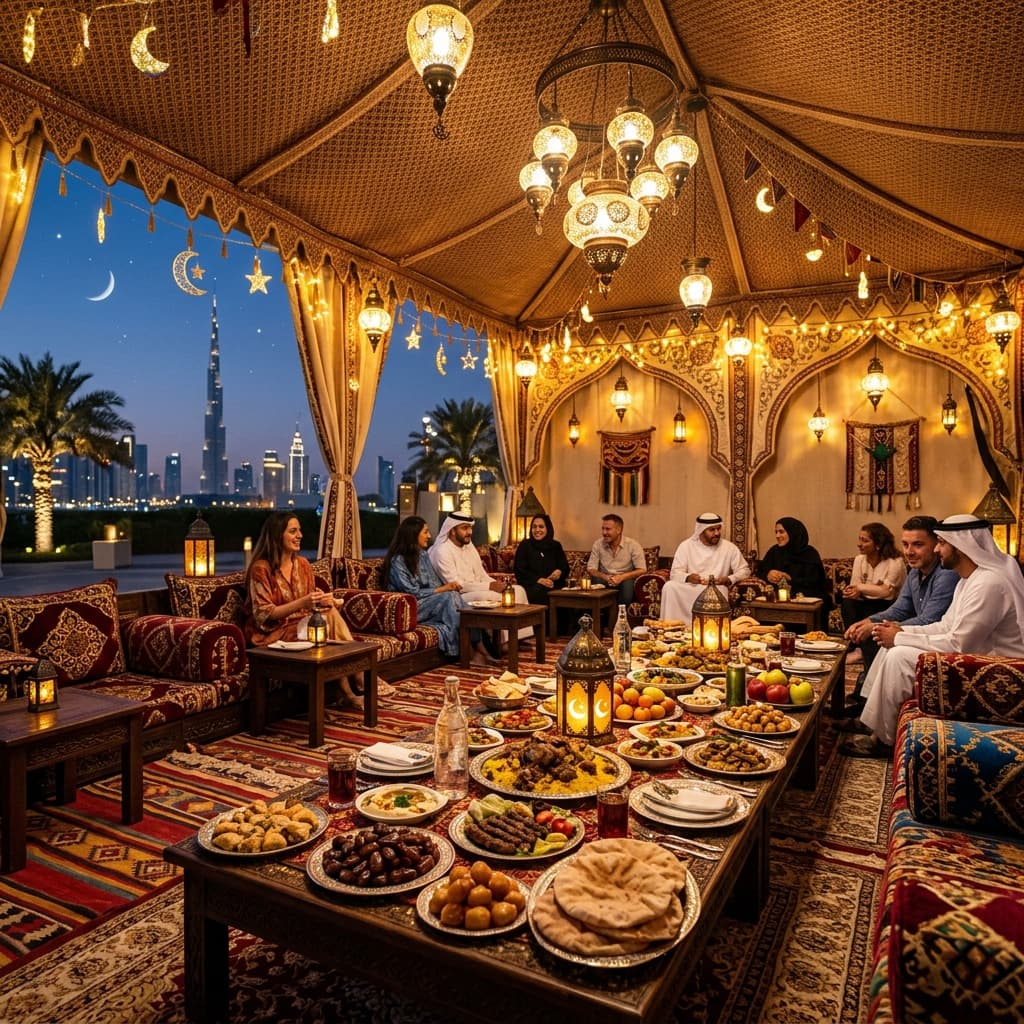
Why Ramadan Might Be the Best Time to Experience Real UAE Culture
Most travel websites tell you to avoid visiting Muslim countries during Ramadan. We'd argue the opposite.
Yes, there are adjustments. Restaurants are quieter during the day. Business hours shift. The rhythm of daily life changes. But that shift reveals something that tourist-season Dubai often conceals: the deep cultural and spiritual heartbeat of the Emirates.
During Ramadan, the UAE slows down in the most beautiful way. Families gather for iftar (the evening meal to break the fast) in a spirit of generosity that extends to visitors. Hotels prepare their most elaborate buffets of the year. Mosques glow with special lighting. Night markets and Ramadan tents pop up across the city, offering food, entertainment, and a sense of community that you simply won't find at any other time.
If you're willing to adapt your schedule and approach the month with respect, Ramadan can be the most culturally immersive experience of your entire UAE trip.
Understanding Ramadan: The Basics
Ramadan is the ninth month of the Islamic (Hijri) calendar, observed by Muslims worldwide as a month of fasting, prayer, reflection, and community. Because the Islamic calendar is lunar, Ramadan moves earlier by approximately 11 days each year.
Key concepts:
- ●Fasting (Sawm): Muslims abstain from food, drink (including water), and smoking from sunrise (Fajr) to sunset (Maghrib) — roughly 13–14 hours in the UAE
- ●Iftar: The evening meal that breaks the fast, typically beginning with dates and water, followed by a full meal
- ●Suhoor: The pre-dawn meal eaten before the fast begins, usually around 3:30–4:30 AM
- ●Eid al-Fitr: The three-day celebration marking the end of Ramadan, featuring family gatherings, gift-giving, and festive meals
Rules for Non-Muslim Visitors
The UAE is more relaxed about Ramadan etiquette than many Muslim-majority countries, but there are clear expectations:
Do's ✅
- ●Eat and drink discreetly. In Dubai, hotels and some restaurants maintain daytime F&B service in screened areas for non-fasting guests. Eating in public spaces during fasting hours is not illegal in Dubai (as of recent reforms) but is still considered disrespectful
- ●Dress modestly. Slightly more conservative clothing is appreciated — cover shoulders and knees in public areas
- ●Wish people "Ramadan Kareem" (Generous Ramadan) or "Ramadan Mubarak" (Blessed Ramadan). Locals genuinely appreciate the gesture from visitors
- ●Accept iftar invitations. If someone invites you to share an iftar meal, accept graciously. It's a profound gesture of hospitality
- ●Slow down. Embrace the gentler pace. Use the quieter daytime hours for spa visits, museum explorations, and shopping
Don'ts ❌
- ●Don't eat, drink, or smoke in public spaces during fasting hours (sunrise to sunset), even where it's technically permitted. Discretion shows respect
- ●Don't play loud music in public during fasting hours
- ●Don't show frustration with altered business hours. Service workers are fasting too — patience is valued
- ●Don't assume everything is closed. Dubai remains very much open for business during Ramadan; hours simply shift
The Iftar Experience: Don't Miss This
Iftar is the highlight of Ramadan for visitors. As the sun sets and the call to prayer echoes across the city, the entire country breaks its fast together. The communal energy is palpable.
Hotel Iftar Buffets
Dubai's hotels transform their restaurants into spectacular iftar venues. These aren't simple meals — they're culinary celebrations featuring hundreds of dishes from across the Arab world:
What to expect:
- ●Traditional dishes: lamb ouzi, chicken machboos, harees, luqaimat
- ●International spreads alongside Arabic specialities
- ●Live cooking stations and fresh bread ovens
- ●Dates, Arabic coffee, and fresh juices
- ●A festive, generous atmosphere with families and friends
Price range: AED 150–450 per person (the quality at even mid-range hotels is remarkable)
Recommended iftar venues:
- ●Asateer Tent, Atlantis The Palm — one of Dubai's most lavish Ramadan tents with live entertainment
- ●Ewaan, Palace Downtown — overlooking the Burj Khalifa, one of the most atmospheric iftar settings
- ●Al Nafoorah, Jumeirah Emirates Towers — Lebanese iftar with a reputation for authenticity
- ●Ramadan Tent, Jumeirah Al Qasr — beachfront Ramadan tent with traditional Arabic entertainment
Ramadan Night Markets
After iftar, the city comes alive. Night markets and Ramadan tents operate from around 9 PM until 2–3 AM, offering food, crafts, entertainment, and shopping in a festive atmosphere.
Tourist Attractions During Ramadan
Almost all attractions remain open during Ramadan, with adjusted hours:
| Attraction | Ramadan Hours | Notes |
|-----------|--------------|-------|
| Dubai Mall | 10 AM – 1 AM | Extended evening hours |
| Burj Khalifa | Normal hours | Iftar packages available at At.mosphere |
| Desert Safaris | Available | Evening safaris may start later |
| Theme Parks | Normal hours | Some shows rescheduled |
| Beaches | Open | Quieter during daytime |
| Museums | Reduced hours | Check individually |
Important: Friday is the most important day for weekly prayers. Expect some attractions to open later on Fridays during Ramadan.
Eid al-Fitr: The Grand Finale
The end of Ramadan is celebrated with Eid al-Fitr — three days of festivities that rival any holiday season in the world:
- ●Spectacular fireworks across Dubai and Abu Dhabi
- ●Sales and promotions at malls and online retailers
- ●Special events at theme parks, hotels, and public spaces
- ●Public holiday — the government typically declares 3–4 days off, making it a popular time for both locals and tourists
- ●Family atmosphere — parks, beaches, and restaurants overflow with celebrating families
Planning Your Ramadan Visit
Accommodation
Hotels welcome non-Muslim guests throughout Ramadan and typically offer discounted rates (20–40% below peak season). Many include complimentary iftar experiences as part of the room rate.
Dining
- ●Breakfast and lunch: Available at hotel restaurants and screened dining areas in malls
- ●Iftar (sunset): Book in advance — the best iftar buffets sell out, especially on weekends
- ●Suhoor (pre-dawn): Late-night dining is easy to find; many restaurants serve until 3 AM
What to Pack
- ●Modest clothing (long sleeves, knee-covering bottoms)
- ●A scarf for women (useful when visiting cultural sites)
- ●Your usual summer gear for hotel pools and beaches
- ●An appetite — iftar portions are generous
Book a Ramadan-Themed Experience
Experiencing Ramadan as a visitor is genuinely special — but navigating the adjusted schedules and cultural nuances is easier with a guide. Sougat Tours offers Ramadan-specific packages that include guided cultural walks, iftar dinner experiences, and evening entertainment.
Explore our Ramadan experiences →
Frequently Asked Questions
Do I have to fast during Ramadan as a tourist?
No. Non-Muslims are not expected to fast. You should, however, eat and drink discreetly during fasting hours as a courtesy.
Can I still get a desert safari during Ramadan?
Yes. Desert safaris operate throughout Ramadan, often with special Ramadan-themed evening programmes including iftar dinners in the desert.
Is alcohol available during Ramadan?
Yes, in licensed venues (hotel bars and restaurants). Some bars may close or reduce hours, but alcohol remains available in Dubai hotels throughout Ramadan.
When is Ramadan in 2026?
Ramadan is expected to begin approximately February 17 and end around March 19, 2026 (exact dates depend on moon sighting).
Are there family-friendly Ramadan activities?
Absolutely. Ramadan night markets, themed entertainment at malls, and family iftar gatherings are core to the experience. Children particularly enjoy the festive atmosphere.