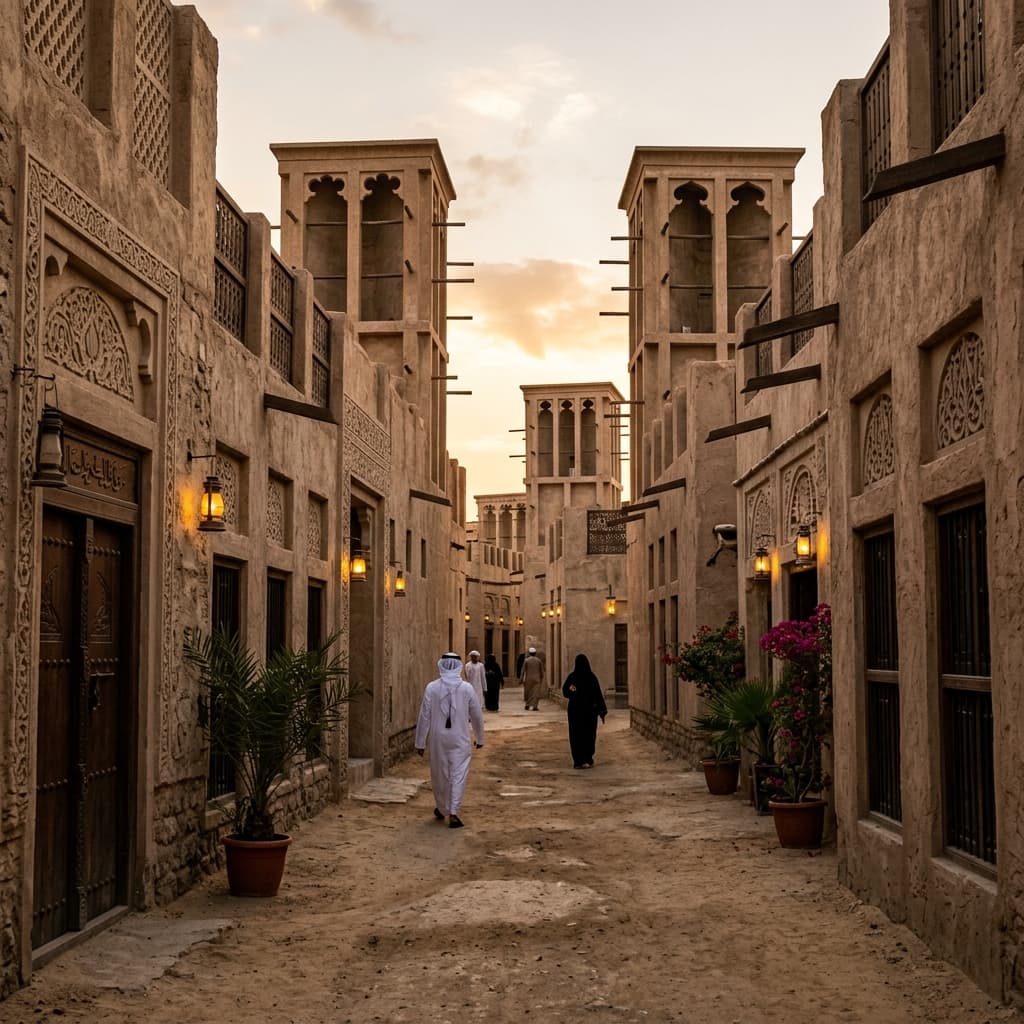
The Dubai Nobody Talks About
For a city that's among the most photographed on earth, Dubai keeps its best secrets remarkably well hidden. Ask ten tourists what they did in Dubai, and you'll hear the same list: Burj Khalifa, Dubai Mall, desert safari, JBR Beach. Good experiences, all of them. But they barely scratch the surface.
The Dubai that stays with you — the one that transforms a holiday from "nice" to "unforgettable" — lives in the spaces between the headlines. In restored fishing villages at dawn. In underground galleries where street art covers every surface. In natural reserves where flamingos wade through mangroves against a backdrop of glass towers. In neighbourhood cafés where you're the only tourist in the room.
Here are the places we send our friends to when they visit — the ones that don't appear on most itineraries.
1. Al Fahidi Historical Neighbourhood
What: Dubai's oldest residential neighbourhood, dating back to the 1890s. Wind-tower houses, narrow sand-coloured lanes, art galleries, boutique museums, and hidden courtyards.
Why it's special: While most of Dubai was built in the last 30 years, Al Fahidi predates it all. Walking its quiet lanes at morning, with light filtering through wind towers and the call to prayer echoing off courtyard walls, feels like finding the city's soul.
Don't miss: The Coffee Museum (yes, it's a real museum, and it's fascinating), the XVA Gallery, and the Arabian Tea House — a courtyard café serving Emirati breakfast that's genuinely one of the best meals in Dubai.
Getting there: Al Fahidi Metro Station. Free to walk around. Individual museums charge AED 3–10.
2. Hatta Mountain Trail
What: A mountain village 130 km from Dubai, right at the Oman border. Deep wadis, natural rock pools, a turquoise dam lake, and an 800-year-old village.
Why it's special: Most visitors don't realise that Dubai's emirate extends deep into the Hajar Mountains. Hatta feels like a different country — rugged limestone peaks, natural swimming pools, and temperatures 10°C cooler than the coast.
Activities: Mountain biking (world-class trails), kayaking on Hatta Dam, hiking through Wadi Hatta, visiting Hatta Heritage Village, glamping at Hatta Dome Park.
Getting there: 90-minute drive from Dubai. No public transport.
3. Ras Al Khor Wildlife Sanctuary
What: A wetland reserve at the end of Dubai Creek where hundreds of Greater Flamingos gather — visible against the backdrop of Dubai's skyline.
Why it's special: The juxtaposition is extraordinary. Through the hides' viewing windows, you'll see flamingos standing in shallow water with the Burj Khalifa rising in the background. It's free, it's peaceful, and it's somehow one of the least-visited spots in the city.
Best time: Early morning (6:30–8:00 AM) for the best light and most active bird behaviour. Winter months (November–March) see the highest flamingo populations.
Getting there: Two viewing hides with free entry. No booking required.
4. Alserkal Avenue
What: An industrial district in Al Quoz converted into Dubai's creative hub — 60+ galleries, artist studios, a cinema, performance spaces, and independent cafés.
Why it's special: This is Dubai's antidote to its own glossy image. Concrete warehouses host cutting-edge contemporary art from the Middle East, Africa, and South Asia. Cinema Akil screens independent films. A4 Space hosts community workshops. The vibe is authentically creative, not curated for tourists.
Don't miss: Gallery hopping on a Saturday afternoon, followed by coffee at Wild & The Moon or a film at Cinema Akil.
Getting there: Al Quoz Industrial Area. Free entry to most galleries.
5. Dubai Creek Harbour & Flamingo Hide
What: A developing waterfront area near Ras Al Khor with a free flamingo viewing platform, mangrove boardwalks, and stunning skyline views.
Why it's special: Few tourists know about this area. The boardwalk offers close-up views of flamingos without the crowds of the main sanctuary. At sunset, the views toward Downtown Dubai are magazine-cover worthy.
6. The Green Planet's Nocturnal Experience
What: After regular hours, Green Planet Dubai (the indoor rainforest) offers a "Night at the Rainforest" experience with torchlight exploration, nocturnal animal encounters, and overnight camping inside the biodome.
Why it's special: Sleeping inside a tropical rainforest in the middle of Dubai — surrounded by the sounds of tree frogs, fruit bats, and rustling canopy — is genuinely surreal.
Cost: AED 399 per person (includes dinner and breakfast)
7. Al Marmoom Desert Conservation Reserve
What: The UAE's largest unfenced nature reserve, spanning 40 km of desert south of Dubai. Home to Arabian Oryx, gazelles, and over 200 bird species.
Why it's special: This isn't a tourist desert safari zone. Al Marmoom is a protected conservation area with cycling tracks, camel trekking routes, and some of the best stargazing in the UAE. The Al Qudra Lakes within the reserve attract migratory birds in winter.
Best for: Cyclists (the 86-km cycling track is world-class), birdwatchers, and anyone wanting to experience the desert without the tourism infrastructure.
8. Bastakiya Nights Restaurant
What: A traditional Emirati restaurant hidden inside a restored wind-tower house in Al Fahidi. No sign on the door. No social media presence. Just word of mouth.
Why it's special: Dining in a 150-year-old courtyard under an open sky, eating harees, machboos, and luqaimat prepared using recipes passed down through generations. It's the most authentic Emirati dining experience in Dubai.
9. The Abandoned Village of Al Jazirat Al Hamra
What: A ghost village in Ras Al Khamah — about 45 minutes from Dubai — abandoned by its pearl-diving residents in the 1960s and gradually being reclaimed by the desert.
Why it's special: Wandering the crumbling coral-stone houses, empty mosque, and wind-battered walls is atmospheric and haunting. It's the only intact example of a traditional Gulf coastal settlement left in the UAE.
Getting there: 45-minute drive from Dubai, near Ras Al Khaimah.
10. Jumeirah Mosque Guided Tour
What: One of the few mosques in Dubai open to non-Muslim visitors, offering guided cultural tours.
Why it's special: The Sheikh Mohammed Centre for Cultural Understanding runs tours that include a Q&A session where no question is off-limits. It's educational, respectful, and genuinely illuminating.
Tours: Saturday, Sunday, Tuesday, Thursday at 10:00 AM. AED 25 per person.
11. Dubai Spice Souk (Early Morning)
What: The famous spice souk in Deira — but visited at 7:00 AM, before the tour groups arrive.
Why it's special: Early morning transforms the souk from a tourist trap into a working market. Local traders unpack fresh saffron, frankincense, dried limes, and spice blends. The air is thick with cardamom and turmeric. No one's selling you a carpet.
12. Last Exit Al Khawaneej
What: A foodie truck park themed as a retro American roadside attraction — neon signs, vintage cars, and independent food trucks.
Why it's special: Away from the tourist zones (near Dubai Safari Park), this is where Dubai residents actually eat on weekends. The food is excellent, the vibe is relaxed, and you'll be surrounded by locals rather than tourists.
13. Jaddaf Waterfront Sculpture Park
What: A waterfront promenade lined with large-scale sculptures and art installations, overlooking the creek toward Festival City.
Why it's special: Almost entirely unknown to tourists. The sculptures are fascinating, the views are beautiful, and it's one of the most peaceful walks in Dubai.
14. Coffee Architecture Tour
What: A self-guided tour of Dubai's specialty coffee scene, hitting architecturally stunning cafés across the city.
Highlights: Nightjar (Al Quoz), The Sum of Us (Al Quoz), % Arabica (DIFC), Tom&Serg (Al Quoz), RAW Coffee (Jumeirah.
Why it's special: Each café is housed in a beautifully designed space, and the specialty coffee scene rivals Melbourne and London. It's a full-day exploration of design and flavour.
15. The Pointe at Palm Jumeirah (Midnight)
What: The shopping and dining waterfront at the tip of Palm Jumeirah — visited not during the day, but after midnight.
Why it's special: Late at night, the crowds thin, the Atlantis is illuminated across the water, and the world's largest fountain show (Palm Fountain) runs its final display. It's peaceful, romantic, and the kind of Dubai moment that doesn't cost anything.
Discover Dubai's Hidden Side
Exploring these spots often requires a car and local knowledge. Sougat Tours offers "Hidden Dubai" experiences that take you beyond the tourist trail to the places that make this city genuinely fascinating.